
Share
Cutting porcelain stoneware without chipping: tools and techniques
Cutting porcelain stoneware requires precision, the right tools, and good technical knowledge. In this article, we'll look at how to cut efficiently, which diamond blades to use, and when to choose wet or dry cutting.
Why it's important to cut porcelain stoneware with care
When you decide to cut porcelain stoneware , you face specific challenges:
-
The material is hard and compact, so it causes rapid wear of the tools
-
The risk of chipping on the edges is high
-
Overheating can compromise the finish
Therefore, it is essential to select quality diamond blades and adopt correct cutting techniques.
Stoneware cutting methods: wet vs. dry
Water jet cutting (recommended method)
When you want to cut porcelain stoneware with maximum safety and quality, water jet cutting remains the best solution.
-
The water cools the disc and the material
-
Drastically reduces dust produced
-
Improves the life of the diamond blade
-
Allows for a cleaner cut with less vibration
Therefore, whenever conditions allow, wet cutting should be preferred to dry cutting.
Dry cutting (option for rapid interventions)
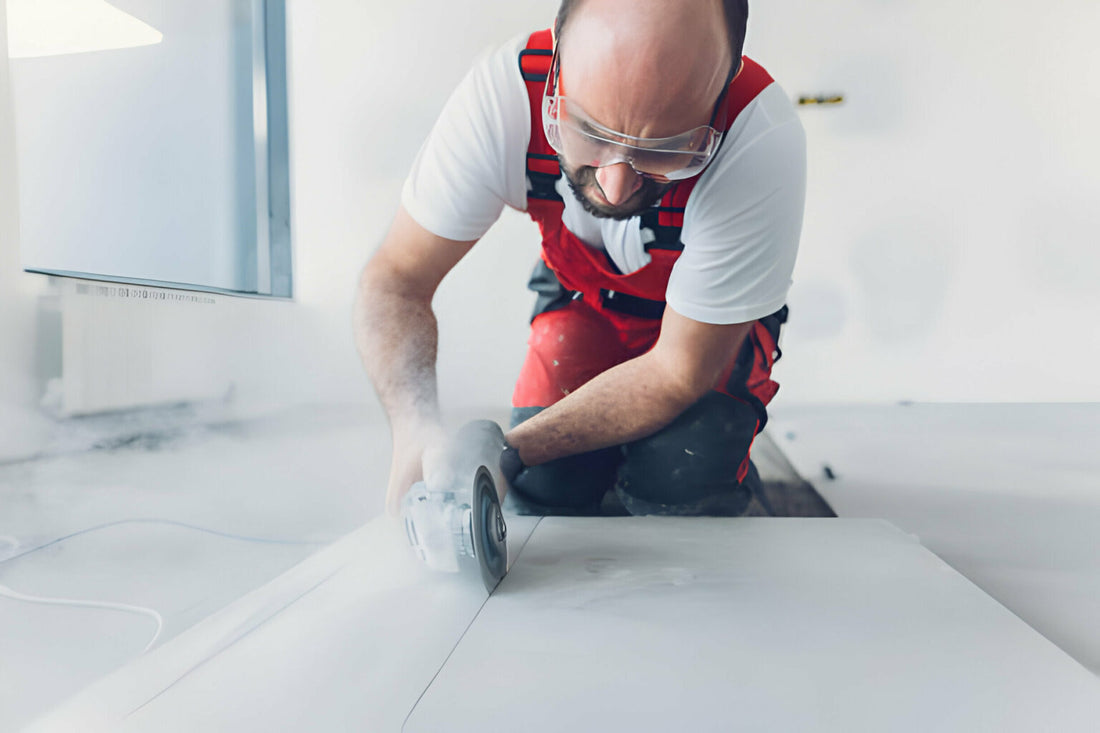
Dry cutting porcelain stoneware can be useful in situations where water is not an option, such as with handheld power tools in tight spaces.
-
It's quick to start
-
It is useful for small touch-ups or light cuts
-
Requires excellent ventilation or extraction system
However, dry cutting causes greater wear on the blade and produces finer dust, which is difficult to fully control. Therefore, it is recommended to use it only for quick and light work.
Main differences between diamond blades for porcelain stoneware
There are various types of diamond blades on the market suitable for cutting porcelain stoneware . Here are the main categories:
-
Continuous rim discs : ideal for clean and delicate cuts on glazed stoneware
-
Turbo discs : thanks to the groove, they dissipate heat better, suitable for faster cuts
-
Segmented discs : rarely used on stoneware, more suitable for abrasive materials
-
Ultra-thin discs : with very reduced thickness, for precision cuts and less waste
Each type performs differently in terms of speed, finish and durability on porcelain stoneware tiles
Practical example: La Nord Srl discs
The Italian company La Nord Srl produces diamond blades specifically for cutting ceramic and porcelain stoneware, which represent a valid choice for those seeking high quality and reliability.
- An example is the Turbo KTRDO disc for ceramics / porcelain stoneware, with continuous turbo crown, 22.2 mm hole and thickness of approximately 1.2 mm .
- The KSP disc specifically for 45° cutting with a reinforced centre
- The KT disc with a soft formulation for cutting 2cm thick porcelain stoneware tiles
Therefore, if you want to cut porcelain stoneware with reliable results, consider using these professional blades.
Operating techniques for cutting porcelain stoneware
Here's a step-by-step guide to cutting porcelain stoneware correctly:
-
Fix the plate to a rigid and stable support .
-
Use a guide or straightedge to ensure a straight cut.
-
Start the disc and let it reach the correct speed.
-
Gradually introduce the plate against the disc, without forcing.
-
Maintain constant, even movement.
-
If you use water jet cutting, ensure continuous flow.
-
Check the disc frequently for wear.
By following these steps, you get a clean cut and reduce the risk of errors.
Advantages and limitations of dry cutting
Main advantages
-
Speed of execution
-
No need for water system
-
Suitable for confined spaces or mobile operations
Significant limitations
-
High dust production
-
Accelerated disk wear
-
Inferior finish compared to water cutting
-
Increased risk of chipping
Therefore, dry cutting is recommended only when the use of water is not possible and for quick operations.
Conclusion
In short, successfully cutting porcelain stoneware requires choosing the most suitable diamond blade, choosing wet cutting, and using correct operating techniques. Dry cutting can be an emergency solution, but it has significant limitations.
If you're looking for high performance and professional results, consider La Nord Srl diamond blades for ceramic and porcelain stoneware, designed specifically for these applications. Visit the La Nord catalog to discover all the available options.


